

CES 2026 continues to show that applied intelligence is woven into a wide range of products that move beyond novelty into real use.
CES Day 3 delivered a strong wave of product reveals focusing on displays, robotics, mobile gear, laptops, and audio tech. Many of these devices integrate software intelligence, adaptive hardware, and user-centered design.
Key takeaways from CES 2026 Day 3
- CES 2026 Day 3 brought new consumer products that blend practical hardware with advanced compute and intelligent features.
- Highlights included extreme brightness TVs, robots that climb stairs, rollable and auto-tracking laptops, and cinematic audio earbuds.
- The AI Library brings the latest updates from 2026 with structured reporting so readers can follow real technology developments.
- For full ongoing coverage throughout the show, see the CES 2026 live news page on Tom’s Guide.
Why Day 3 mattered
CES Day 3 revealed products that look ready for retail and everyday use. Instead of just concepts, many devices came with features that reflect real consumer value:
- TVs and displays with greater brightness and contrast.
- Robotics built for realistic home environments.
- Laptops with new mechanical features.
- Wearables and audio with certifications geared toward quality.
CES 2026 Day 3: 15 Must-See Innovations From the Show Floor
1. Samsung QD-OLED with extreme brightness
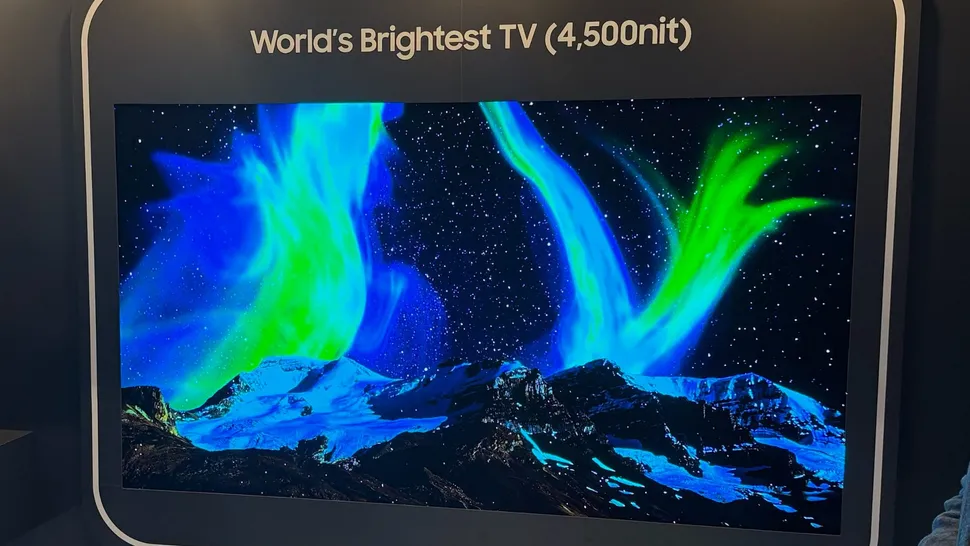
Samsung revealed a new QD-OLED television capable of reaching 4,500 nits of peak brightness, which pushes HDR performance and outdoor viewability.
High-brightness panels like this aim to improve color clarity and contrast without sacrificing deep blacks.
2. Roborock Saros Rover robot vacuum
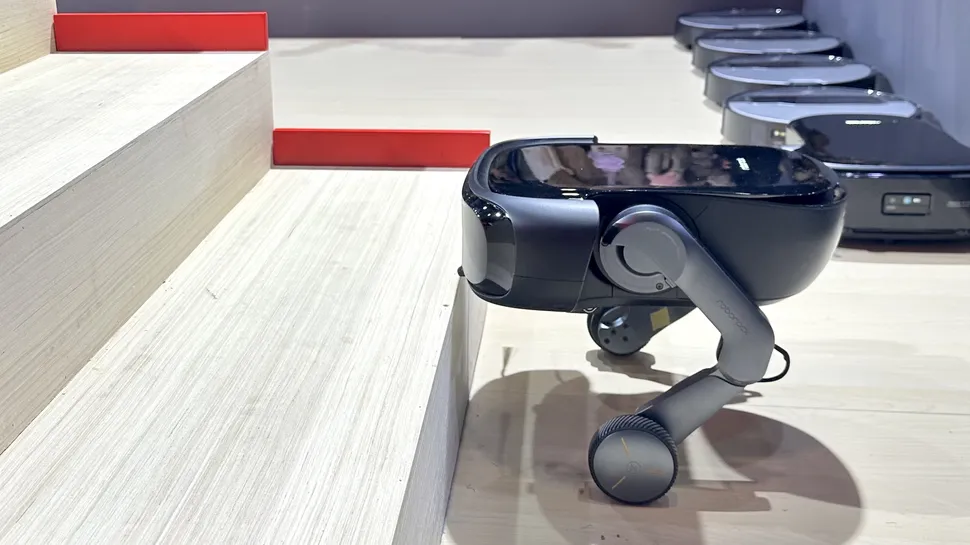
Roborock showcased the Saros Rover, a robotic vacuum that can climb stairs. This track-capable robot represents progress in autonomous home cleaning for multi-level living spaces.
Robotics at CES are shifting toward environments with real obstacles and complex layouts.
3. Ecovacs LilMilo robotic companion

Ecovacs brought LilMilo, an AI robotic dog. This pet-like robot is designed for interactive companionship, with sensors and movement that mimic a living companion.
Consumer robotics includes both utility and lifestyle variants this year.
4. Razer Project Motoko AI headset
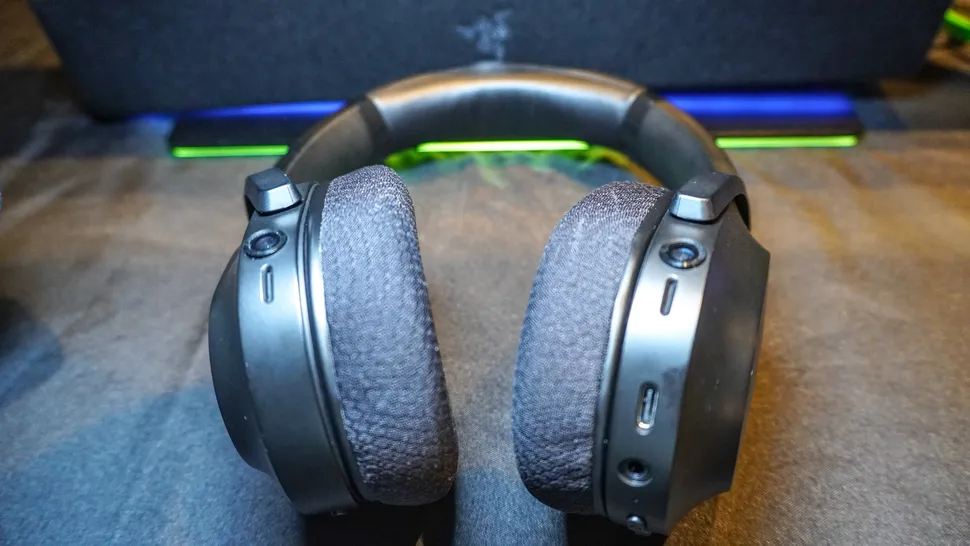
Razer presented the Project Motoko headset featuring advanced audio and AI interaction with real-time visual processing.
Such wearables aim to augment both entertainment and integration with intelligent services.
5. Motorola Razr Fold foldable phone
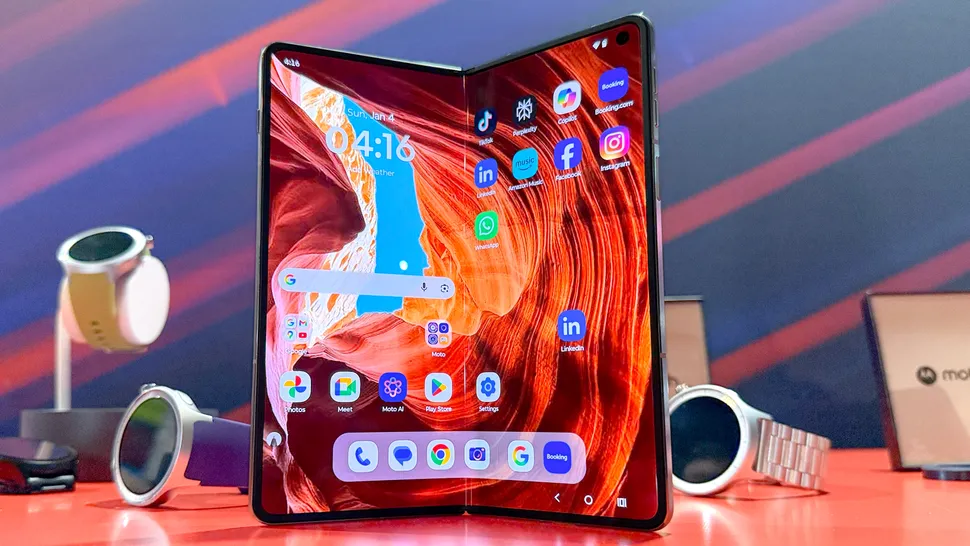
Motorola debuted its book-style Razr Fold, featuring high-resolution cameras and a dual display system.
Foldable hardware continues to evolve with larger surfaces and more cameras.
6. Lenovo ThinkBook Plus Gen 7 Auto Twist
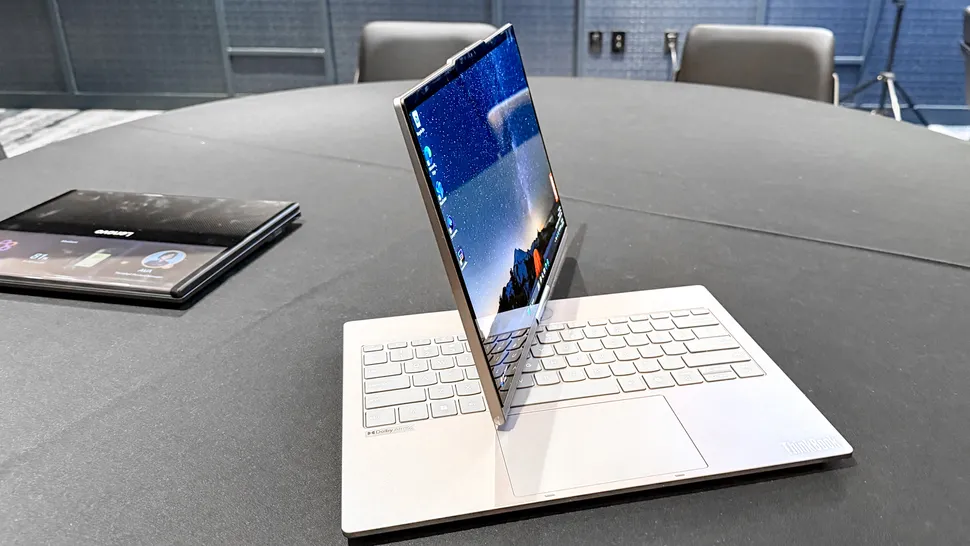
Lenovo’s Auto Twist laptop includes a motorized hinge that physically tracks the user’s face during calls and presentations.
This kind of physical interactivity ties hardware movement to user behavior.
7. Lenovo Legion Pro Rollable
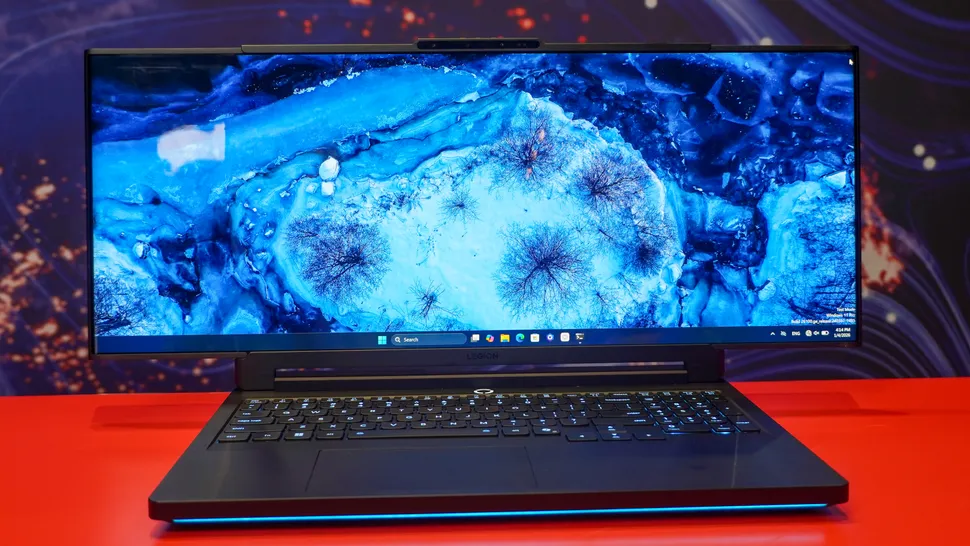
Lenovo also showed the Legion Pro Rollable, a gaming laptop with an extendable screen that reaches 24 inches.
Rollable displays push the concept of screen real estate beyond fixed sizes.
8. Navee UT5 Ultra X electric scooter
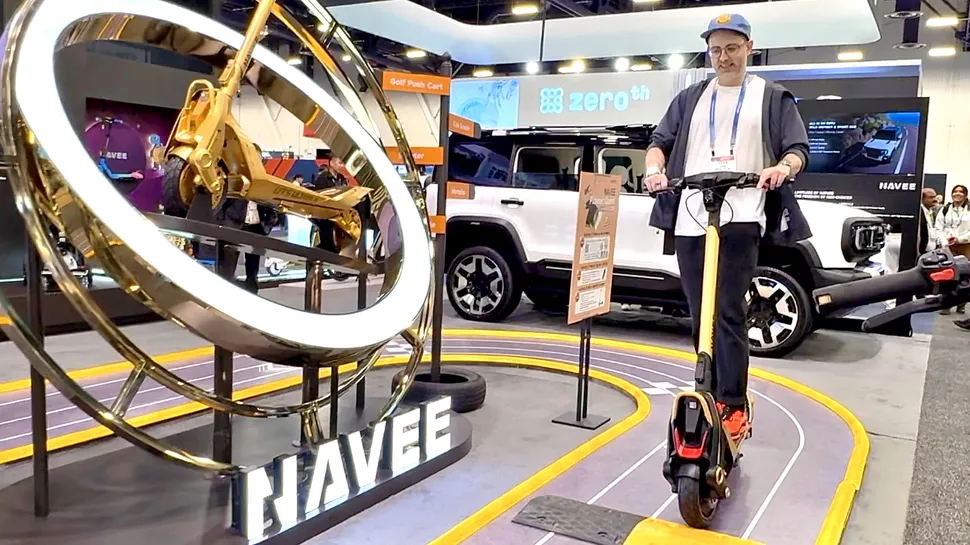
The Navee UT5 Ultra X offers a high-speed electric scooter experience with a luxurious design and powerful motors.
Mobility tech at CES continues to blend performance with consumer appeal.
9. Breggz Zohn-1 IMAX Enhanced earbuds
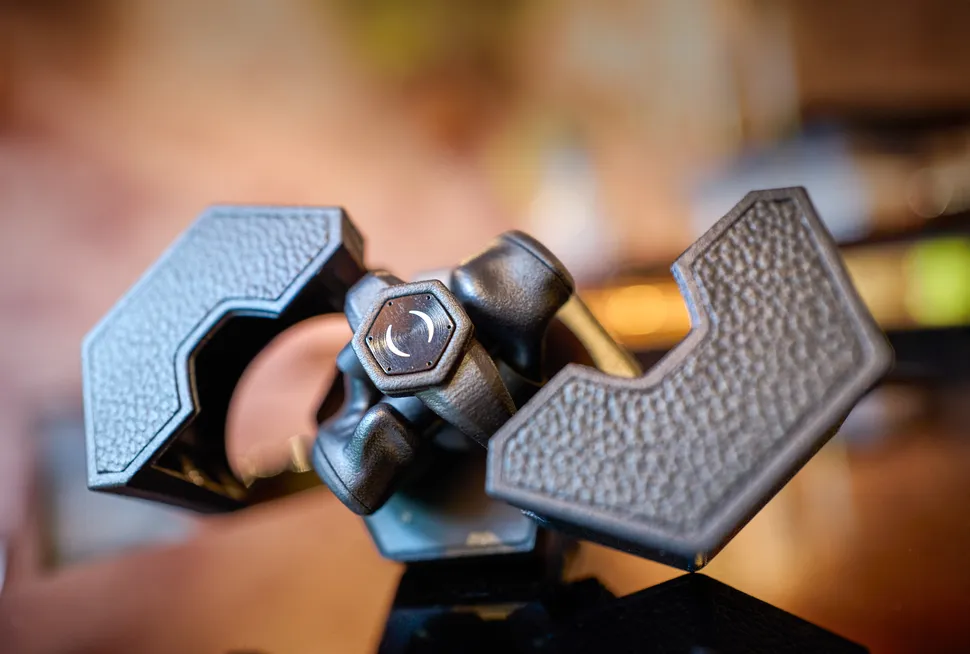
Breggz introduced the Zohn-1 earbuds, the first in-ear headphones to receive IMAX Enhanced and DTS certifications.
Audio credibility like this signals how portable sound gear is being engineered for cinema-like quality.
10. IKEA Smart Lights With Adaptive Control

IKEA presented a new generation of smart lighting designed to adjust brightness and color based on time of day and room activity. These lights connect with home systems to change mood and visibility automatically, reducing the need for manual adjustments.
The focus is on practical lighting that responds to how people actually use their spaces, rather than complex setup requirements.
11. Lenovo ThinkCentre X AIO Aura Edition
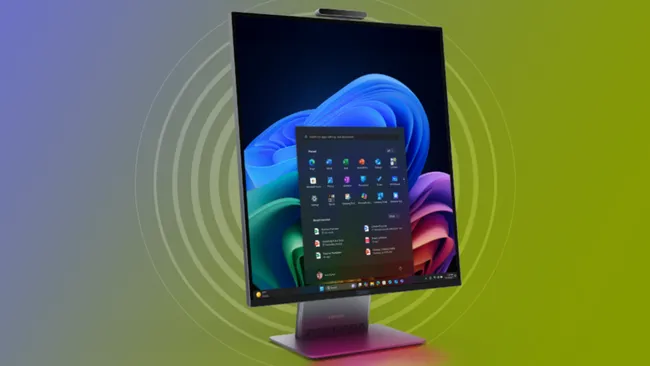
Lenovo introduced a near-square desktop PC with a 28-inch 16:18 display and AI-enhanced webcam systems for work and video communication.
This design targets productivity by increasing vertical screen space.
12. Satechi Slim EX Modular Keyboard

Satechi revealed the Slim EX keyboard with a replaceable battery system. Instead of discarding the entire keyboard when the battery degrades, users can swap it out and continue using the same device.
This approach supports longer product lifespans and reflects growing interest in modular, repair-friendly accessories.
13. NuraLogix Longevity Mirror
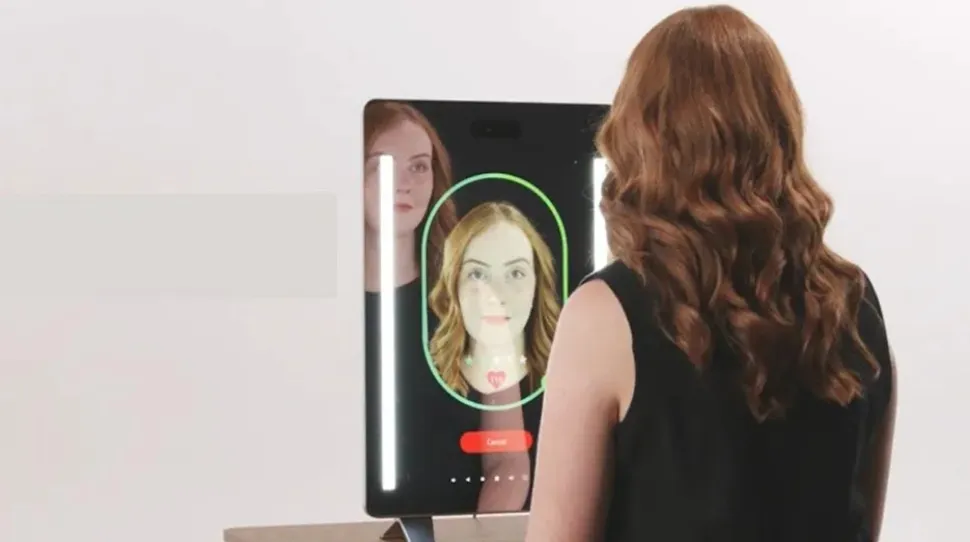
The NuraLogix Longevity Mirror is a health-focused smart mirror introduced at CES 2026 that measures multiple wellness indicators without requiring wearable hardware.
Using a built-in camera and AI-based analysis, the mirror evaluates subtle blood flow patterns in the user’s face. This process allows it to estimate metrics such as heart rate, blood pressure, and physiological age during normal use.
14. Tensor Robocar
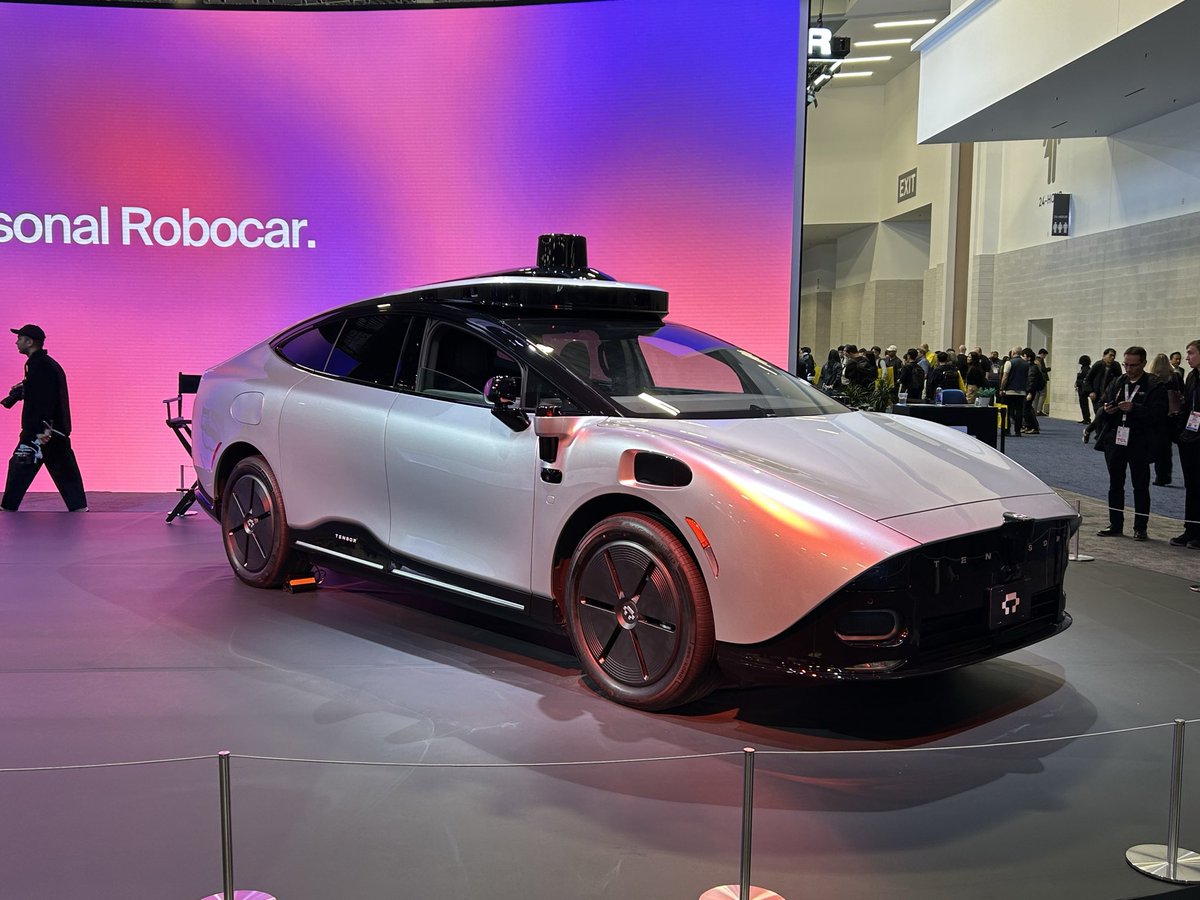
The Tensor Robocar was one of the notable vehicle concepts shown at CES 2026, highlighting how far autonomous mobility has progressed.
The vehicle supports Level 4 autonomy, allowing it to operate without constant human attention. In this mode, passengers do not need to monitor the road, and the steering wheel can be retracted during autonomous operation.
Inside, the robocar features 13-inch displays for each passenger, along with onboard AI models that manage driving, cabin systems, and diagnostics. Additional features include self-cleaning functions and proprietary sensor hardware designed to support autonomous operation.
15. Chips and compute announcements

While not tied to one specific gadget, keynotes and back-stage announcements highlighted next-generation AI chips and platform updates that underpin the hardware shown on Day 3. This underlines how CES is now as much about compute architecture as physical devices.
Read Also: CES 2026 Day 2 Highlights 15 Exhibitions Shaping Tech and AI Integration
The Direction of CES 2026
Day 3 confirmed that smart hardware now combines advanced imaging, robotics, foldable and rollable screens, and intelligent audio. Many products shown are close to retail release, suggesting companies are building on production-ready designs rather than pure concepts.
Why follow CES coverage on The AI Library
The AI Library continues to publish CES 2026 insights that combine deep reporting with practical context. Readers who want structured summaries of new devices, reliable sourcing, and link-back references should follow The AI Library for complete ongoing coverage.
For live updates and daily gadget summaries, you can also refer to the CES 2026 live news page on Tom’s Guide, which tracks announcements throughout the show.
Frequently Asked Questions About CES 2026 Day 3
1. What made CES 2026 Day 3 different from earlier days?
Day 3 focused heavily on near-ready products rather than early concepts. Many announcements centered on hardware that solves real problems, such as stair-climbing robots, rollable laptop screens, and extreme-brightness TVs.
This shift suggests companies are prioritizing deployment over experimentation.
2. Which product categories dominated Day 3?
Several categories appeared repeatedly across booths and demos:
- Robotics for home and lifestyle use
- Displays with higher brightness or flexible form factors
- Laptops with mechanical movement or expanded screens
- Audio devices certified for cinema-grade performance
These categories show how hardware design and intelligent software continue to merge.
3. Was artificial intelligence a central theme on Day 3?
Yes, though it appeared less as a headline feature and more as embedded functionality.
AI supported tasks such as motion tracking, object recognition, adaptive displays, and sound tuning. This reflects a move toward intelligence operating quietly in the background.
4. How close are these products to reaching consumers?
Many devices shown on Day 3 are expected to enter retail channels within the year.
Several products already have finalized designs, certifications, or production timelines. This includes televisions, laptops, wearables, and consumer robots.
5. How does Day 3 connect to CES 2026 as a whole?
Day 3 served as confirmation rather than surprise.
The themes introduced earlier in the week were reinforced with more refined hardware, clearer pricing signals, and fewer speculative demos. It tied together the direction shown across the entire event.
Why follow CES coverage on The AI Library
The AI Library continues to publish CES 2026 insights that combine deep reporting with practical context. Readers who want structured summaries of new devices, reliable sourcing, and link-back references should follow The AI Library for complete ongoing coverage.
For live updates and daily gadget summaries, you can also refer to the CES 2026 live news page on Tom’s Guide, which tracks announcements throughout the show.